We asked hundreds of lawyers about their career priorities, what trade-offs they are willing to make, and what they expect from their employers. Their responses reveal where law firms are meeting expectations and where significant gaps remain.
Read insights from Part One here.
Lawyers are well paid. Yet turnover in the legal profession remains high.
We see lawyers:
We surveyed hundreds of lawyers to find out what they will and won’t accept.
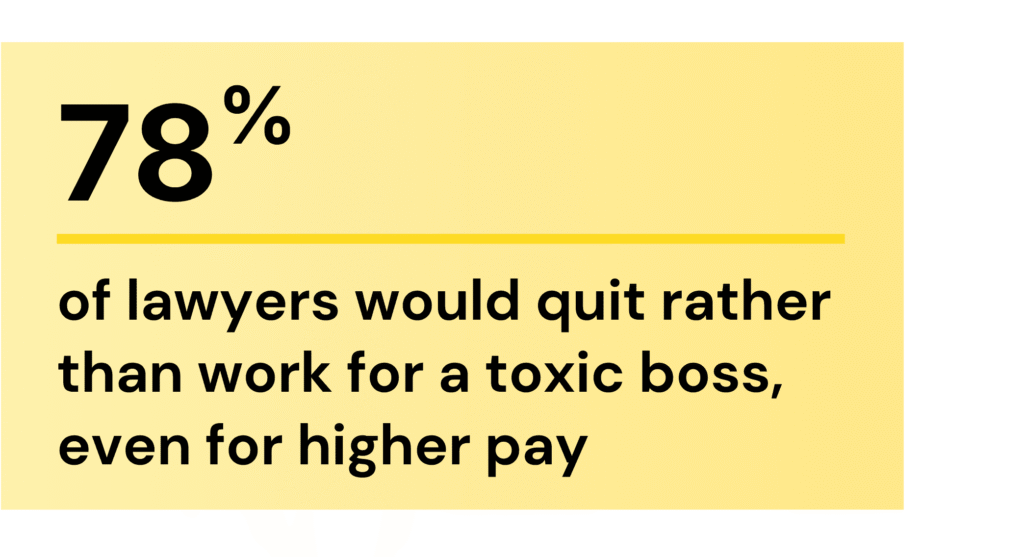
High pay does not justify poor leadership.
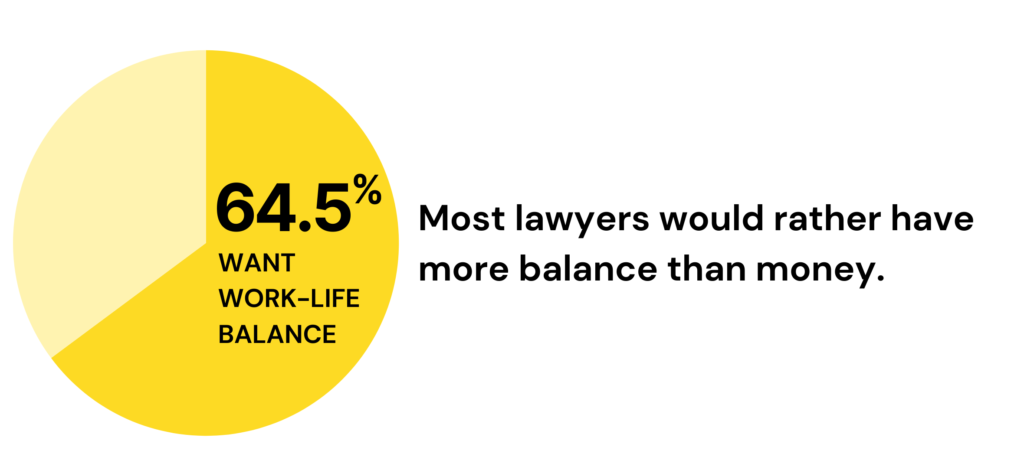
For most lawyers, the working environment matters more than compensation alone.
This is a leadership problem, not a generational one.
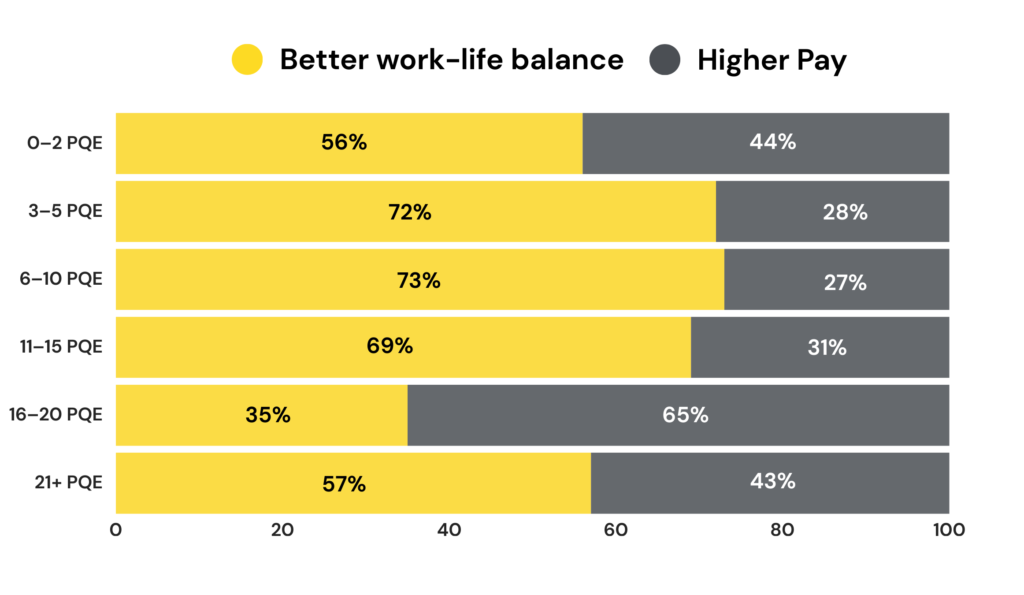
Higher pay OR better work-life balance?
Early to mid-career (3-15 years): 7 out of 10 choose balance over money.
Partnership level (16-20 years): Most choose money over balance.
Senior level (21+ years): Balance becomes the priority again
Most lawyers won’t stay just because you pay them more.
Mid-career lawyers want better hours and flexibility, not bigger paychecks.
What do you most wish your employer understood about your career goals?
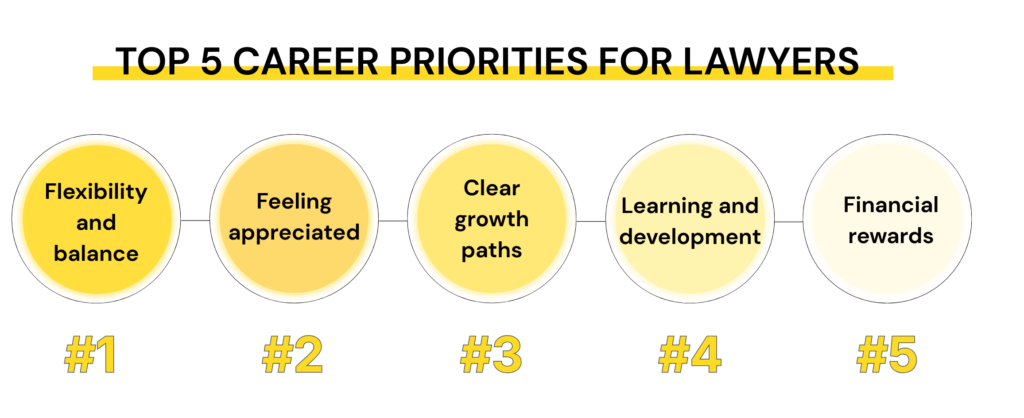
Financial rewards ranked last.
When lawyers think about career success, they prioritise flexibility, feeling valued, and knowing where they’re headed.
Pay matters. But it’s not enough on its own
The longer lawyers stay, the less they know about how to progress.
Lawyers ranked “clear growth paths” as a top career priority but most firms aren’t providing it.
When people can’t see their path forward, they leave.
Clarity is not a nice-to-have. It’s a retention tool.
Compensation matters. But it’s not enough on its own.
Lawyers want sustainable workloads, clarity on progression, fair treatment, and leadership they can trust.
Most won’t trade their wellbeing for a bigger paycheck.
Firms that get this will keep their people. Firms that only adjust salaries will keep losing them.
Subscribe to our newsletter to be kept informed of future updates.
Want to stay ahead with the latest updates in the legal sector?